

Authenticity alone is not enough to build trust and be a more effective leader.
You can be authentically lazy or authentically unprepared. I am authentically impatient when someone wastes my time—and it isn’t my best leadership quality!
For years, I’ve struggled with a better term for authenticity (and I have a few alternatives in mind, stay tuned).
What I’ve realized is: yes, authenticity is important, and we have to be strategic in how we bring it. People often get into trouble “Bringing their authentic self to work” when their version of authenticity doesn’t match what their employer considers to be authenticity. It can feel like a tough balance.
Consider this Venn Diagram. You have Authenticity in one circle, and Effectiveness in the other. On our leadership journey, we have to find the intersection of the two: what’s authentic to you and what’s effective for your context, audience, or organization.
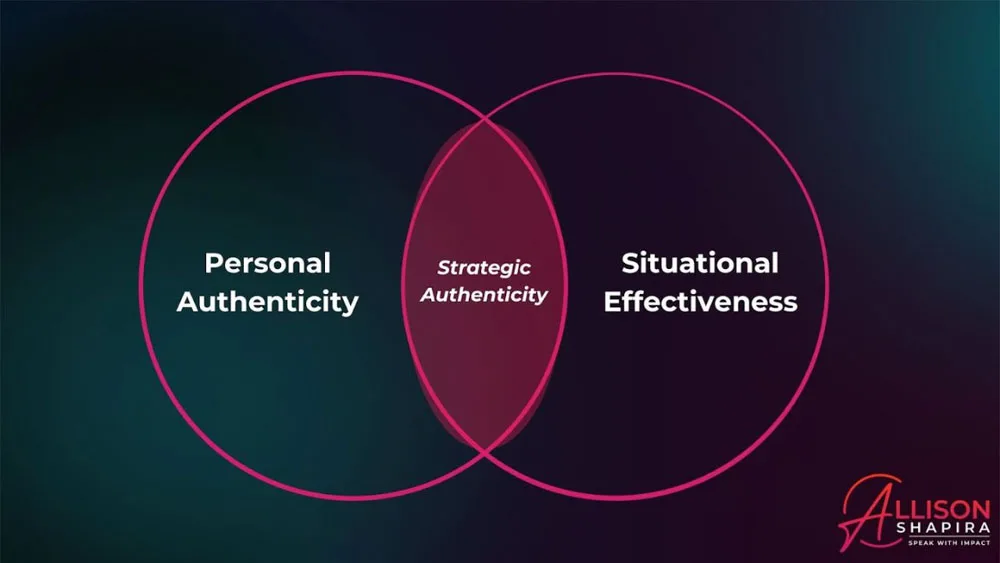
I call that overlap Strategic Authenticity, because you strategically choose elements of your best self to bring forth based on what will be effective in any given context.
For instance, what’s authentic to me is wearing jeans and flip flops. However, that will be ineffective when delivering a keynote to an audience of investment bankers. So I strategically choose to wear attire that delivers the message I want to deliver (professionalism, experience), while also being authentic to my personal style (bright color, sparkly shoes).
Using another example from a professional setting:
- Authenticity is greeting an audience by saying, Hey guys! (casual)
- Effectiveness is greeting an audience by saying, Good afternoon! (formal)
- Strategic Authenticity is in the middle: Welcome, everyone! (both authentic and effective)
We deliver messages with our attire, our words, and our energy.
With my advisory clients, we often discuss all the elements of their authenticity and then strategically analyze the culture of their organization to find the sweet spot.
What does strategic authenticity look like for you?