
You’ve been invited to moderate a panel. Now what?
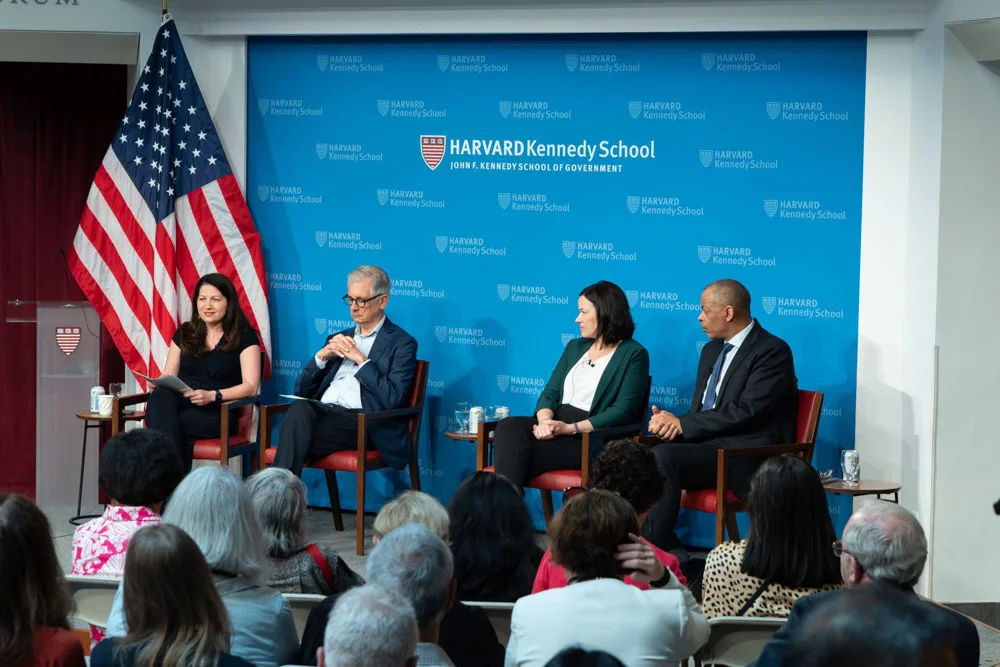
A few weeks ago, I moderated a panel at my Harvard Kennedy School reunion, in front of 900 alumni from around the world.
The topic? “Making government work.”
Uh oh. How could I keep my pessimism to a minimum, given my views on the state of government around the world? I had to put aside personal politics and maintain my objectivity.
We had an incredible, bipartisan panel of people who had actively worked in government: Stephen Goldsmith, Anthony Foxx, and Elizabeth Linos.
I received a list of suggested questions from the organizer, and it was my job to make the questions my own.
I prepared a 3-minute “opening statement” framing the topic. I looked for a surprising, counterintuitive way to open the panel and identified a story that was both funny and sadly ironic. I was afraid it might be too sarcastic, so I tested it with a few trusted colleagues to make sure it didn’t cross the line. The feedback was positive, so I used it.
A few days before the event, I emailed the panelists to ask, “What’s one point you want to make?” so that I could ensure the questions met their own objectives (and to ensure they were adequately preparing).
Then, I read the suggested questions out loud and realized they had been written for the eye and not for the ear. They looked good on paper but were quite complicated to pronounce. So I re-wrote them in a simpler way.
Write for the Ear, Not the Eye
Side note: I was advising a client recently on a similar issue. This senior executive had been handed a video script to record, only to find she was stumbling over the words. She realized that she had the agency to say, “This doesn’t work for me, and I’m going to change it.” Instead of awkwardly contorting her voice, she was able to hold firm to her own language and, in doing so, better represented the company.
Once I had reworded the questions, I put them into ChatGPT to ensure that they were both politically and globally balanced.
The day before the panel, I emailed the updated questions to the panelists. I strongly encouraged them to keep their answers to 2–3 minutes and said that, if necessary, I would jump in and interrupt them.
This was critical. We often feel awkward interrupting people on stage, but if we give them advance notice, we can confidently step into the moderating role we’ve created.
Take the Lead—With Preparation and Permission
Was I nervous? Of course! I was going to moderate a VIP panel on a hotly contested topic in front of 900 of my peers from around the world. Also, I was recovering from a cold and afraid that my voice would cut out on stage.
We took our seats on stage. I shared my opening statement, introduced the panelists, and set ground rules for our conversation, including my warning that I might interrupt either the panelists or the audience members asking questions, if they went on for too long.
And in fact, more than once I had to interrupt an audience member to gently say, “And your question is?” However, because I had let people know in advance, I felt comfortable with the bold move. There was even a heckler at the end who refused to stop talking—you can watch that through the link below.
Overall, the panel was a success because we had the right people and we had the right process.
When moderating a panel, we need both.
As you move into senior leadership positions, you will receive more opportunities to moderate a panel. Say “yes” to these opportunities, prepare using the strategies I’ve outlined above, and you’ll be able to raise your visibility and that of your organization.
Let me know how it goes!