
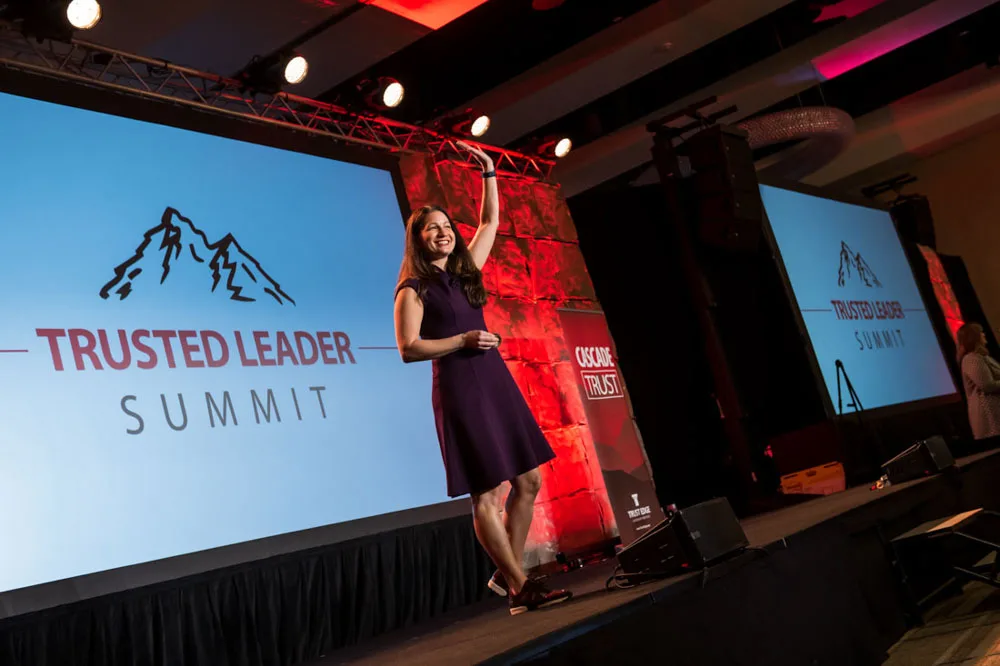
Asking better leadership questions is becoming one of the most important skills for senior executives today. In an era defined by geopolitical shifts, rapid technological change, and constant uncertainty, leaders are no longer expected to have every answer. Instead, the most effective leaders guide conversations by asking the questions that clarify priorities, build trust, and help teams navigate complexity with confidence.
The most powerful person in the room is often not the one with all the answers.
It’s the one who asks the right question that changes how everyone else thinks.
After speaking in Davos in January, one comment I heard stayed with me because it affirmed something I’ve been teaching for years: the role of the senior leader is shifting to Chief Question Officer.
From Trusted Expert to Chief Question Officer
Most senior leaders built their credibility by being the trusted advisor—the one who was always prepared, always informed, always ready with a solution. That expertise earned them a seat at the table.
But at a certain level, expertise is no longer the basis for success.
You are now responsible for a broader portfolio. You’re pulled into board meetings, investor conversations, external panels, and internal town halls. You’re speaking more often, on topics that evolve daily, without additional time to prepare.
Framing Uncertainty
In this environment, leadership is less about demonstrating certainty and more about framing uncertainty. Asking questions helps us determine what information we need in order to make a decision. It helps us demonstrate active listening, which builds trust and credibility with our audience.
This has always been true.
10 years ago, a senior investment banker told me, “We need to spend less time creating 200-page pitch books and more time coming up with more insightful questions to ask.”
That observation is even more urgent now.
Geopolitical shifts, technological acceleration, supply chain volatility, and workforce transformation are happening simultaneously. No one person can master all of it. But the right question can clarify priorities.
The Questions Leaders Must Be Asking
Here are some of the questions I’m helping leaders answer. This builds off of an article I wrote for Harvard Business Review in 2022, How to Talk to Your Team About Distressing News Events
On an individual level:
- How does the news affect my role and decision-making?
- What does my team need from me at this moment?
- Who should be on my team to provide the perspectives I need to navigate the future?
On an organizational level:
- How confident do I feel in our short-term scenario planning?
- Where are we assuming stability that may no longer exist?
- What is the cost of being underprepared?
Adding Another Layer
In Who Not How, Dan Sullivan argues that success comes from identifying who can help you solve a problem rather than trying to do everything yourself. I would add another layer: it also comes from knowing what to ask once you’ve identified the right people.
Moving from expert to questioner is one the most important leadership competencies you can develop.
To be the leader you were born to be, stop cramming for all answers. Start assembling your team of advisors and determining the questions you need to ask in order to more effectively lead your team through this time of transition.
An Invitation
I’m working with a limited number of organizations to help their senior leaders refine the questions that drive clarity and alignment during times of rapid change.
If that would be helpful for you or your team, let’s start a conversation. Fill out our conversation form, and we’ll follow up within 24 hours.
Until next week,
~ Allison
A Leadership Conversation Starter
In this conversation on the Future Factory with Anthony Amunategui, I talk about why leaders don’t always need the perfect speech or a fully formed solution.
What they might need instead is a strategic conversation starter—a way to invite the right perspectives into the room so the team can think through the challenge together.