
Collective effervescence, a term coined by French sociologist Émile Durkheim, is the shared energy and sense of connection we feel when people come together around a common experience. You feel it in a sports stadium, at a concert, and in those rare conference moments when an entire room is completely engaged. As AI becomes part of more of our meetings and daily work, creating that kind of human connection at in-person events will become even more important. For meeting planners and leaders, the question is: How do you design an event that creates it?
Can you feel the energy in the room?
If you’ve ever planned an in-person meeting, conference, or offsite, you know how important the energy in the room is. The energy determines the success or failure of your event. You can get the venue, the agenda, and the catering right and still lose the day if the room never comes alive.
It’s called collective effervescence, a term coined by French sociologist Émile Durkheim.
You feel it in a sports stadium when everyone does “the wave,” or at a music concert when the singer stops singing their hit song in the middle of a phrase and lets the audience finish it for them (I love that moment, especially during a Goo Goo Dolls concert). It creates a feeling of community and connection that people carry with them long after the event ends.
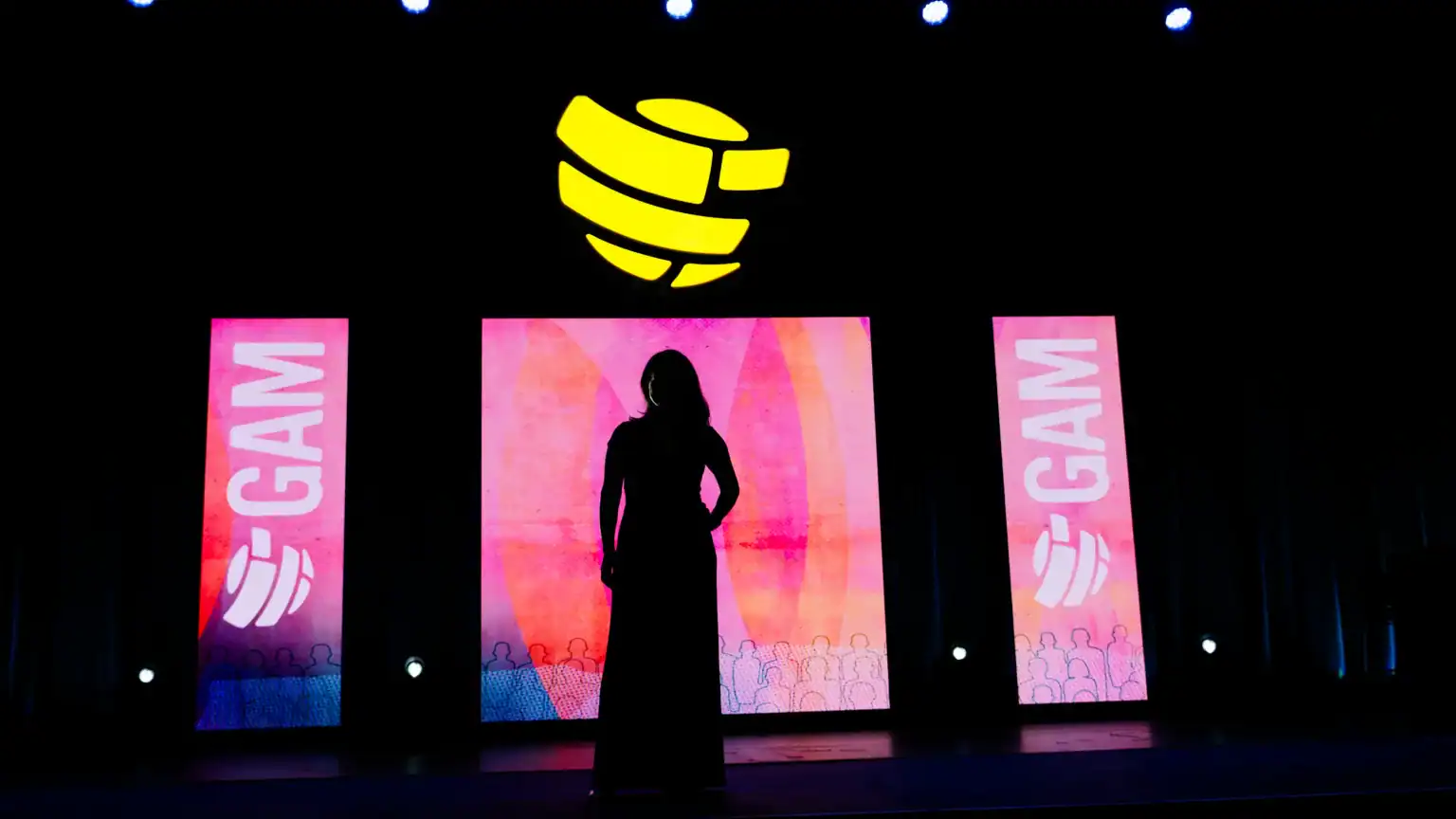
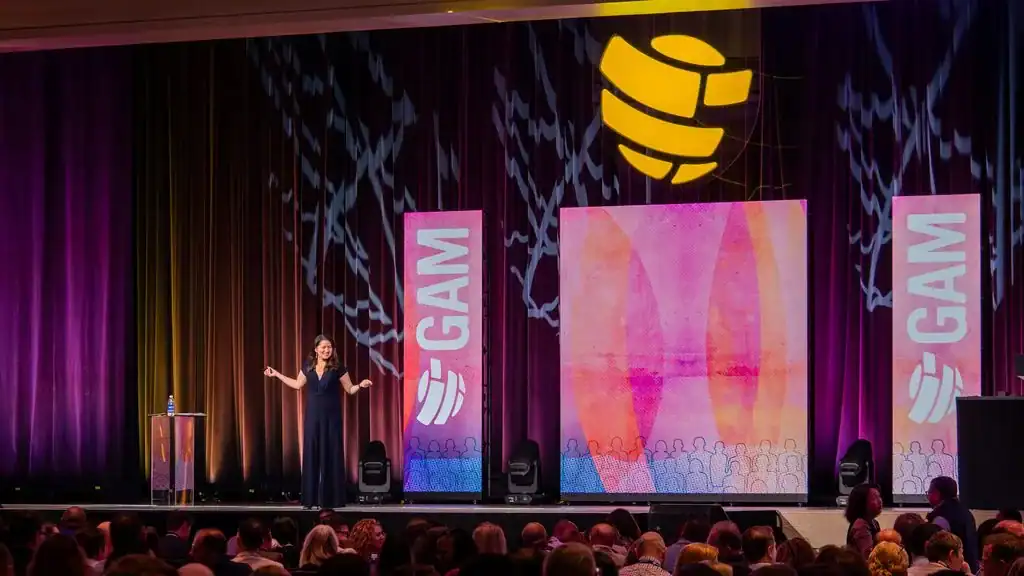
I feel it at the end of my own keynotes. I close by singing opera, as a way of making the point that authenticity matters more than perfection. When I finish singing, there is a moment of complete silence where no one in the room breathes. Then I speak my last sentence, and the room applauds. That silence is what collective effervescence feels like from the stage.
That’s what a transformational keynote should achieve.
Why in-person connection matters even more in the age of AI
Humans survived as a species because we were able to come together and collaborate. Community and connection are how we thrive, and they are the reason people still get on a plane to sit in a ballroom with strangers.
As AI works its way into more of our meetings and processes, we need collective effervescence more than ever, because it will be more scarce. When each of us spends the day in conversation with our own AI assistant, the hours we spend together in a room carry more weight than they used to.
The same is true of information. With more of us getting our news from personalized sources, conferences are no longer the place people go to learn something new. A good podcast can do that. Conferences are about connection, energy, and revitalization: to reward people, to help them improve, and to remind them why they do what they do.
So how do you design for it?
How to create collective effervescence at your next event
- Choose speakers who engage rather than present. Ask every candidate how they engage the audience in the first two minutes. Hint: It shouldn’t live on their slides.
- Be intentional about the first and last speaker of the day. The person who opens sets the emotional temperature for everything that follows, including the sessions they have nothing to do with. The person who closes determines what people carry home. That is true even of the people who are “just” doing introductions or final announcements.
- Use your conference app to connect people in real life. The best ones match attendees on shared interests and get them talking before they ever arrive. Then, they suggest meaningful interactions during the event.
- Bring in an emcee who builds a throughline. A good emcee connects each speaker to the one before, so the day becomes a narrative rather than a sequence of sessions.
One of the best compliments I ever received from a keynote came from a long-time client, an Executive Vice President at a major bank: “You opening the meeting set the energy for the entire day.“
Commonality is one of the key components of Believability, my newest keynote. It’s the sense that a speaker understands the audience and creates a shared experience with them. In a room of 1,000 people, that commonality creates the conditions for collective effervescence. Credibility may get you invited to the stage; commonality helps the audience connect with you once you’re there.
The best in-person events give people something they can’t get on their own: the experience of being part of something together.
If you’re designing a meeting where the energy in the room matters, I’d like to hear about it. Tell me about your event, and we can explore whether one of my keynotes is the right fit. I have a little room left on my fall calendar and I’m now booking for 2027.
Until next time,
~Allison
Allison Shapira
Harvard Lecturer. Executive Advisor. Hall of Fame Speaker. Bestselling Author.